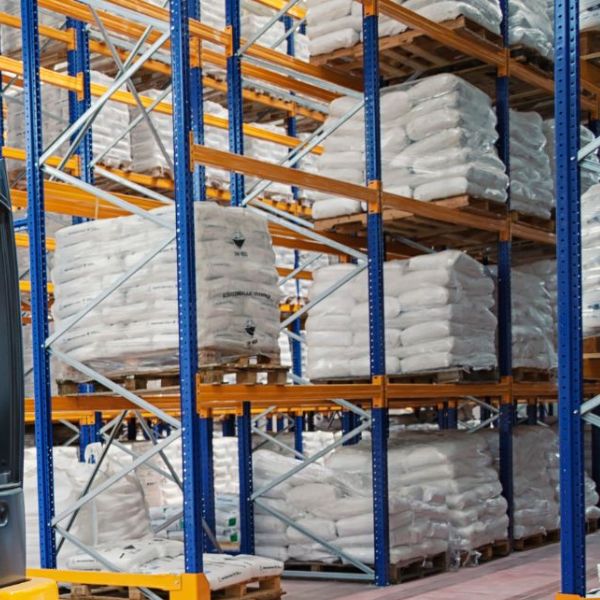
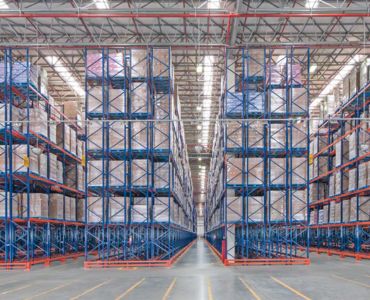
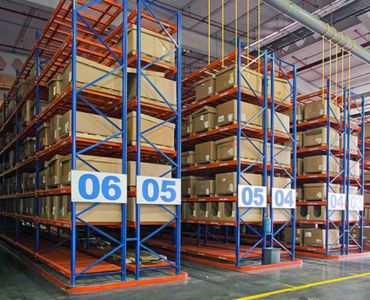
The Selective Pallet Racking System is a storage solution specifically created to accommodate a large quantity of pallets in a warehouse setting. Featuring vertical uprights and adjustable horizontal beams, this system is designed for effective utilization of storage space and ease of access. Pallet loading and unloading are facilitated through the use of Material Handling Equipment. This equipment can easily navigate through the aisles between the racks. Consequently, the Selective Pallet Racking System is an excellent choice for high-density storage of uniform items which can be palletized for storage.
Structure: Selective pallet racking is made up of upright frames and horizontal beams. The frames act as vertical columns, carrying the system's weight, whereas the beams join these frames horizontally, forming shelves for storing pallets.
Accessibility: This type of racking provides direct access to each pallet location. You can access any pallet without needing to relocate others, making it a suitable option where high selectivity is necessary.
Adjustability: The horizontal beams on the frames can typically be adjusted, providing flexibility in accommodating different pallet sizes. This feature enhances its versatility and adaptability to meet changing storage requirements.
Pallet Load and Weight: The design of selective pallet racking allows it to support diverse pallet sizes and weights. For safe operation, it is crucial to stick to the manufacturer's specified weight limits.
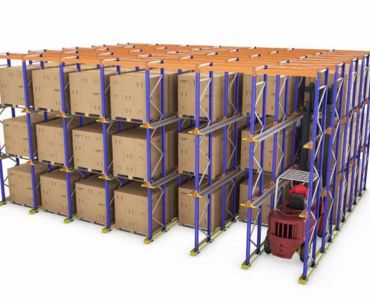
Making the Most of Space: Although selective racking offers superior selectivity, it might not be the optimum choice for space efficiency. Other racking designs such as drive-in racking or push-back racking can be considered as they enhance storage density at the expense of some degree of selectivity.
Setting Up and Upkeeping: Selective pallet racking is not only easy to install but also maintain. Regular checks are pivotal to ascertain the system's structural soundness and safety.
Value for Money: Though selective racking is perceived as cost-effective owing to its simplicity and straightforward installation, the total expenditure can vary. Factors influencing the cost include the storage area's size, the number of required pallet positions, and optional elements like safety accessories.
Ensuring Safety: Using safety tools like beam connectors, safety pins, and load beam stops can significantly reduce the risk of accidental beam and pallet displacement. It's also crucial to provide comprehensive training to forklift operators to guarantee safe operations.
Practical Uses: Businesses that necessitate high selectivity and frequent pallet accessibility can particularly benefit from selective pallet racking. This system is commonly employed in various sectors, including manufacturing, distribution, retail, and logistics.
Design Factors: Throughout the installation of selective pallet racking, you must take critical factors into account. These factors include aisle width, load capacity, and the overall design layout. Careful consideration will ensure maximum space utilization and enhance workflow productivity.
When conceptualizing and implementing selective pallet racking, collaborating with knowledgeable professionals is crucial. This ensures that the racking system will satisfy your unique storage needs and adhere to critical safety guidelines.